
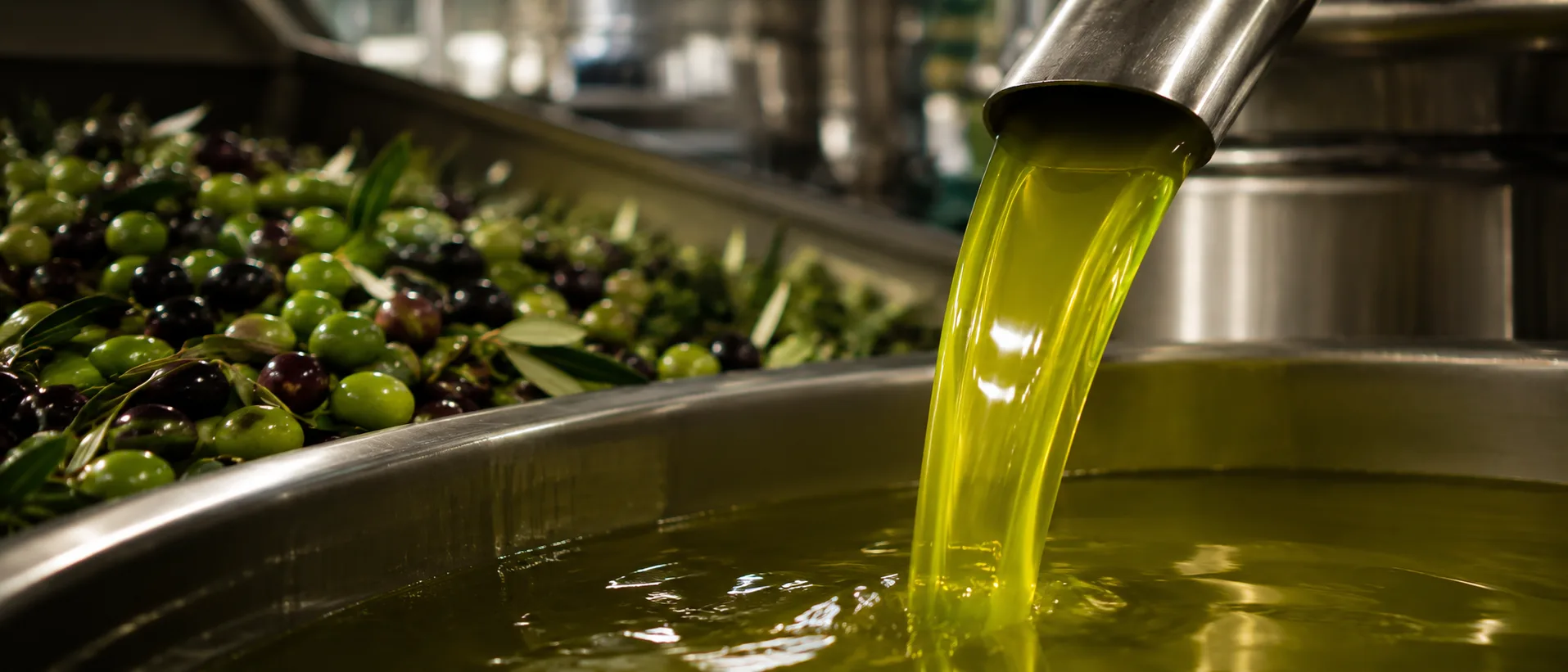
"Extra virgin" is the highest grade of olive oil — but what does the label actually promise?
It comes down to how the oil is made and how it tastes. Extra virgin olive oil is extracted from olives using only mechanical means, without heat or chemicals. It must be free of defects and carry the genuine aroma and flavour of the fruit.
Cold extraction, no shortcuts
Extra virgin oil is produced by crushing and pressing olives at low temperatures — so nothing is refined away and nothing artificial is added. What ends up in the bottle is essentially fresh olive juice.
What acidity tells you
You will often see a figure like 0.3%. This free-acidity level is a marker of quality: to qualify as extra virgin, oil must sit below the legal limit, and a low figure points to healthy fruit handled quickly and carefully. Our Premium Tin, for example, is bottled at just 0.3%.
How it should taste
- Fruity — green or ripe, like fresh olives, grass or tomato leaf.
- Bitter — a pleasant edge across the tongue, a sign of healthy antioxidants.
- Peppery — a gentle catch at the back of the throat as you swallow.
Fruity, bitter, peppery: three good things, all at once.
Want to taste the difference deliberately? Read our guide to tasting olive oil.