
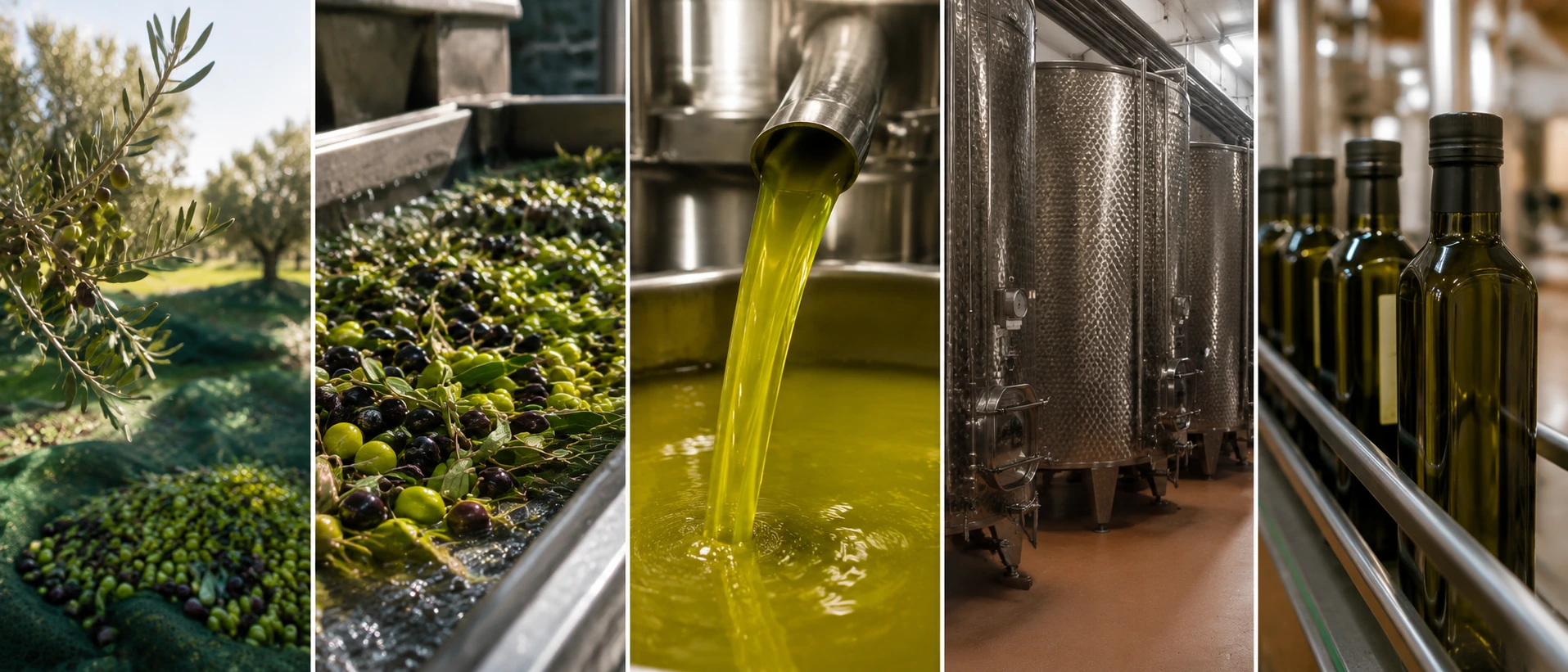
Great olive oil is not made in a single moment. It is the result of dozens of small, careful decisions, from the way a tree is pruned in winter to the temperature of the tank it rests in before bottling.
At Minoiko, every one of those decisions is made by the Alexakis family in Lagouta, Minoa Pediadas. Here is how a single harvest becomes the oil that reaches your table.
1. Cultivation
The year begins in the grove. Our olive trees are tended through every season, following their natural cycle and drawing on knowledge passed down through generations of local growers. Healthy trees, cared for without shortcuts, are the foundation of everything that follows.
2. Harvest & cold extraction
Timing is everything. We harvest when the fruit reaches the ideal stage of ripeness, then transport it quickly to the mill so extraction can begin within hours. The olives are washed, crushed into a paste, and slowly malaxed so the tiny droplets of oil can gather before separation — all kept cool to protect aroma and flavour.
The less time between the branch and the tank, the more of the grove you can taste in the glass.
3. Storage
Fresh oil is sensitive to its three great enemies: light, heat and air. We store it in food-grade stainless-steel tanks under controlled conditions, protected from all three, and monitor it until the moment it is ready to be bottled.
4. Bottling
Finally, the oil is filled into dark glass or protective tin, sealed and checked with care. Each container carries clear information about what is inside and where it comes from — because provenance is part of the product.
Want to see it for yourself? Read more about our estate and process, or explore the collection.